 Stonehenge Tours from London
Stonehenge Solstice from London
The Stonehenge solstice is the one time each year you can stand inside the stones for free. Four times a year, at both solstices and both equinoxes, English Heritage opens the circle for managed open access and drops the ticket and the rope. This guide covers what that means for a day from London, the published timings for the 2026 summer solstice opening, how to get there when the roads and car parks fill up, and what to do if you cannot travel overnight. It also explains why no ordinary Stonehenge tour from London reaches a solstice sunrise, and what the sunrise inner circle tour is instead. Every figure below comes from the published English Heritage material for the event. The tours themselves are compared on all Stonehenge tours from London.
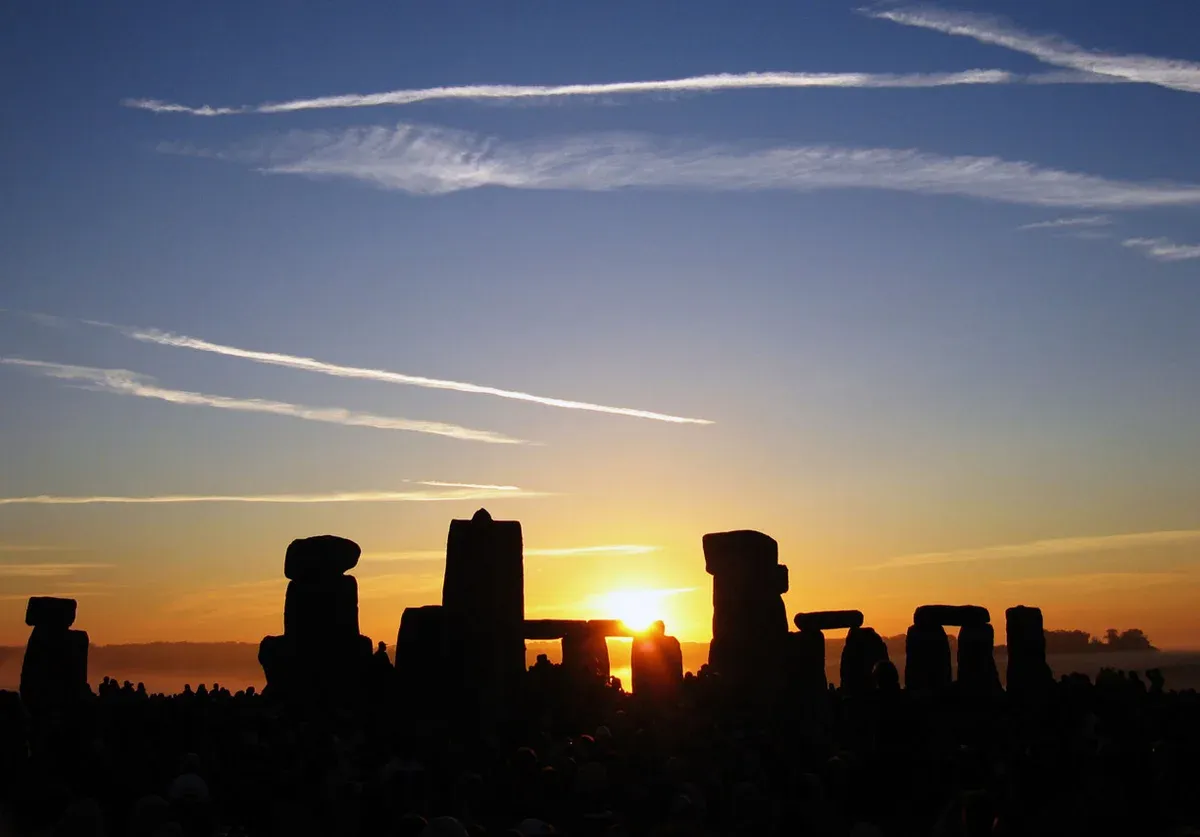
Sunrise behind the Heel Stone at the summer solstice. Photo: Andrew Dunn (andrewdunnphoto.com), CC BY-SA 2.0, via Wikimedia Commons
Quick answer The short answer
The Stonehenge solstice is free: four times a year English Heritage opens the circle for managed open access and no ticket is needed. At the 2026 summer solstice the car park opened at 19:00 on 20 June, sunset fell about 21:26 and sunrise about 04:52, with everyone out by 12:00. No regular day tour from London reaches that sunrise, because the coaches run to the visitor centre's normal opening hours.
Key takeaways
- Solstice access is free and ticketless, unlike a normal visit at £27.20 ($36.05) advance: see Stonehenge tickets for the paid route.
- Want inside the stones on a normal day? That is the paid Stonehenge Stone Circle Experience, from £70 adult.
- The closest bookable trip is the Stonehenge Inner Circle Sunrise or Sunset Tour from London with Bath at $219, which is not a solstice event.
- Compare all Stonehenge tours from London before deciding how to spend the day.
What Managed Open Access Means
Solstice access works differently from every other day of the year, and the differences are worth understanding before you plan a night out.
Four Free Openings a Year
Four times a year English Heritage opens the stone circle itself for managed open access: both solstices and both equinoxes. Entry is free and there is no normal ticketing. This matters, because on any other day a standard advance ticket costs £27.20 ($36.05) for an adult booked online by midnight the day before, and even then you stay on a roped path around the stones.
At solstice you walk among them. The stones line up with the summer solstice sunrise and the winter solstice sunset, which is why these two dates carry the tradition. The event is managed: there are opening and closing times, a car park with a last admission time, and stewards on site.
It is not an open invitation to arrive whenever you like.
You Still Cannot Touch or Climb the Stones
A common belief is that solstice is the day the ban on touching the stones is lifted. The published rules for ordinary visits and for the paid Stone Circle Experience ban touching and climbing, and that ban has stood since 1977. The managed open access guidance does not state that touching the stones is permitted, so we cannot tell you it is.
Treat the access as an invitation to stand close to the stones inside the circle, not to climb them. If the exact rules for a given opening matter to you, read the conditions English Heritage publishes with each event, because they are set per opening.
Sources: English Heritage solstice page
Summer Solstice Timings
The summer solstice opening runs through the night, and the clock matters at every stage of it.
The 2026 Timetable, Hour by Hour
The published schedule for the 2026 summer solstice opening gives you a clear frame for the night. It ran through the night of 20 to 21 June, and every time below comes from English Heritage's own event page. The car park filled up: parking for the 2026 event sold out in advance, which is the single most important planning fact if you intend to drive.
The table lays the night out in order so you can see how long you actually get at the stones and where the hard cut-offs fall.
| Moment | Time | What happens |
|---|---|---|
| Car park opens | 19:00 on 20 June | Parking sold out in advance for the 2026 event |
| Sunset | About 21:26 | The evening crowd builds through the dark |
| Last parking admission | 04:15 | Arrive after this and you do not get in |
| Sunrise | About 04:52 | The moment the event exists for |
| Site closes | 12:00 on 21 June | Everyone out by noon |
What the Night Actually Costs
Solstice entry itself is free, which makes it the cheapest possible way inside the stones from London. Compare that with the normal route: an advance adult ticket at £27.20 ($36.05), or £32.00 ($42.41) on the day at the gate, and even the paid Stonehenge Stone Circle Experience starts at £70 adult for one hour inside. The costs at solstice are transport and endurance instead.
A normal bus timetable did not apply over the solstice weekend, so Salisbury Reds ran special buses from Salisbury station and the city centre via Amesbury. If you drove, parking sold out in advance, so there was no paying at the gate on the night.
Sources: English Heritage solstice page
Getting There from London for Solstice
The distance does not change at solstice, but the transport picture does, and mostly for the worse.
The Distance Is the Same, the Roads Are Not
Stonehenge sits 140.8 km (87.5 miles) from central London, about 1 hour 49 minutes by car with no traffic. The tour coaches budget 105 minutes to 2 hours each way, and the A303 past Stonehenge is still a single-carriageway road that jams in summer. For a sunrise at about 04:52 you would be driving out of London in the middle of the night, and the last parking admission of 04:15 leaves no slack at all if the road is slow.
That is why most solstice visitors from London who drive go the evening before, sleep badly or not at all in the car park, and wait for the sunrise. The 2026 car park sold out in advance, so a last-minute drive was never an option anyway.
Buses and Trains at Solstice
The ordinary public transport chain breaks at solstice. On a normal day you take a South Western Railway train from London Waterloo to Salisbury, fastest about 1 hour 21 minutes and roughly every 30 minutes, then the Stonehenge Tour bus from the station in 35 minutes. That normal bus timetable did not apply over the 2026 solstice weekend.
Instead Salisbury Reds ran special buses from Salisbury station and the city centre via Amesbury for the event. The train itself runs all night only in a limited way, so check the timetable for the exact night before you commit. The reliable plan is: train to Salisbury late in the evening, special bus to the stones, night in the open, sunrise, out by 12:00.
Why No Regular Day Tour Reaches the Sunrise
No coach day tour from London arrives in time for a solstice sunrise, and none of the tours compared on this site markets a solstice trip. A half-day coach leaves central London between 7:30 AM and 9:10 AM and reaches the stones at the 9:30 public opening at the earliest. Solstice access ends at 12:00 with everyone out, so the schedules simply never meet.
The tours also run to the visitor centre's normal operation, with entry tickets and roped paths, not the free open access event. If a site claims a solstice sunrise coach from London, treat it with suspicion and check the departure time against the 04:52 sunrise.
Sources: English Heritage solstice page
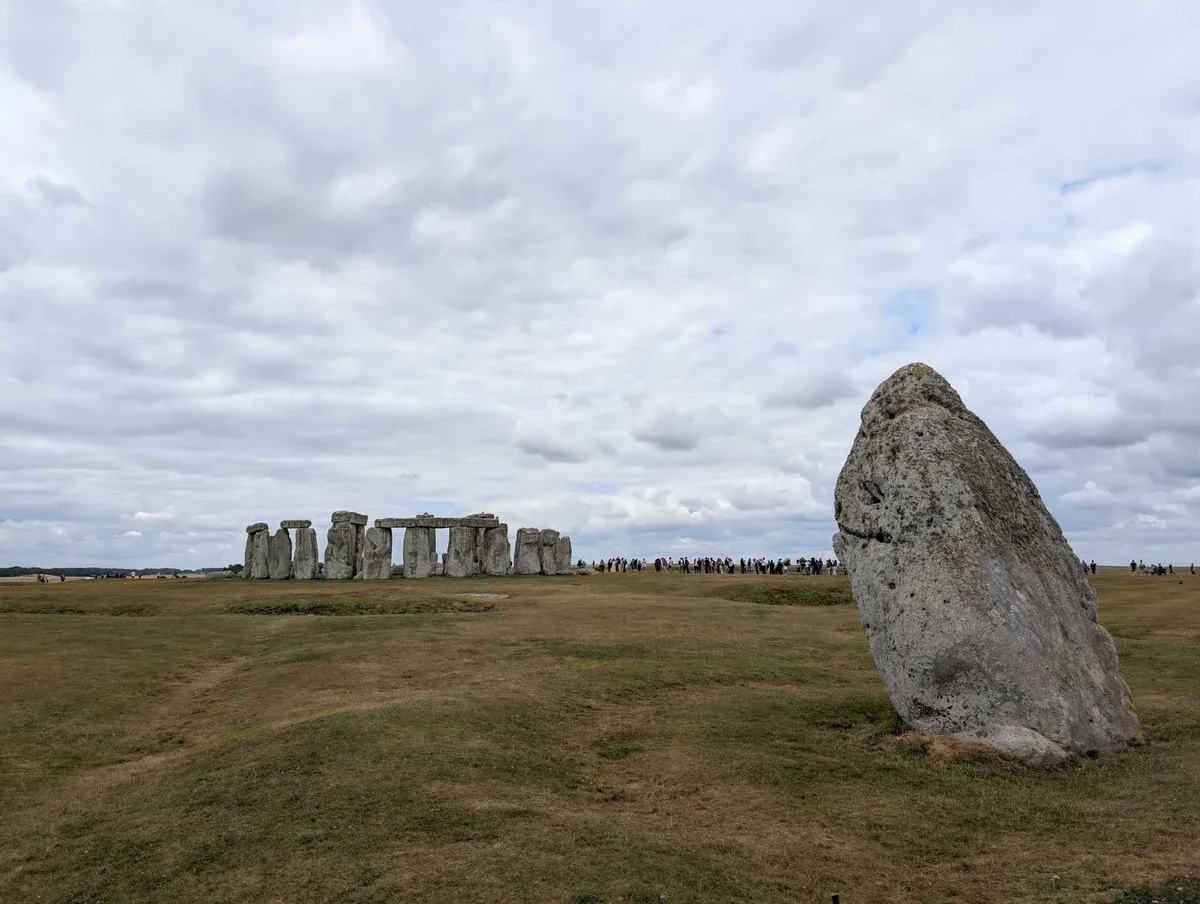
The Heel Stone, on the line of the midsummer sunrise. Photo: Andy Li, CC0, via Wikimedia Commons
The Winter Solstice
The winter solstice gets far less attention, and far less published information in advance.
The Date Is Not Yet Published
English Heritage had not published the winter solstice 2026 opening arrangements when this page was researched, so no date or timetable can be quoted here. The astronomical winter solstice itself falls around 21-22 December. What you can rely on is the pattern: the winter solstice is one of the four managed open access events alongside the summer solstice and the two equinoxes, and the main axis of the monument lines up with the winter solstice sunset rather than the sunrise.
Expect a shorter, colder, wetter night than June. Salisbury Plain averages about 4 C in winter, the site is open and exposed, and there is no shelter at the stones. Wait for English Heritage to publish the arrangements before booking any travel.
Sources: English Heritage solstice page
The Closest Bookable Alternative from London
If you cannot camp out for a solstice sunrise, one tour from London gets you inside the stones close to sunrise on a normal day.
What the Sunrise Inner Circle Tour Is
The Stonehenge Inner Circle Sunrise or Sunset Tour from London with Bath costs $219, runs 12 hours and takes you inside the circle when the site is closed to the public, close to sunrise or sunset. The sunrise departure leaves at 5:30 AM from the Millennium Gloucester Hotel in South Kensington. You get access inside the stones outside opening hours, which no standard day tour offers, plus Bath and a short stop in Lacock with an optional meal at the 14th-century George Inn.
Free cancellation ends 8 days out, not 24 hours, so book only when you are sure.
What It Is Not
This is not a solstice event and it is not free. The group is up to 50 people, all Premium Tours customers, so it is not a private visit for your party either. The tour runs no departures in October or November, when English Heritage closes the circle to these visits, which makes the inner circle tours seasonal.
On summer dates with very long days the sunrise departure may not line up with the actual sunrise moment, and in wet weather the inner circle can be shut, in which case you get a guided walk beyond the roped path instead. A cheaper and larger-group option with the same inside access is the Stonehenge Inner Circle Access Day Trip with Windsor at $255, which runs on set dates from mid-May to late September. For anything else, the Stonehenge tours from London comparison covers the standard days that keep you behind the rope.
Solstice or Something Else?
Four ways to get close to the stones, and the one that fits your night and budget.
If You want inside the stones for free and can stay up all night.
Go to the summer solstice managed open access. Entry is free, but parking sold out in advance for the 2026 event, so plan the train to Salisbury and the special event buses, and check whether English Heritage has published arrangements for the next opening.
If You want inside the stones on a normal day without an overnight mission.
Book the Stonehenge Inner Circle Sunrise or Sunset Tour from London with Bath at $219. It runs close to sunrise or sunset outside public hours, but not at solstice, and there are no departures in October or November.
If You just want a good look at the stones from London in one day.
Take a standard day instead. The Stonehenge Morning Half-Day Tour at $87 gives about 2 hours on site with entry, the most time of any coach half day.
If You want to understand the alignment without the crowds.
Skip the event entirely and visit normally: a ticket keeps you on the roped path, but the axis and the summer sunrise alignment are explained on site, and the Stonehenge and Avebury day at $132 adds the world's largest stone circle for context.
Stonehenge Solstice Questions
Is there a solstice event at Stonehenge?
Yes. English Heritage opens the circle for managed open access four times a year, at both solstices and both equinoxes, with free entry. The 2026 summer solstice opening ran through the night of 20 to 21 June, and the winter solstice arrangements had not been published when this page was written. Full details sit in the summer solstice timings section above.
Do you need tickets for the Stonehenge summer solstice?
No ticket is needed for the managed open access itself. Entry is free, which is the point of the event. The cost is getting there: the 2026 car park sold out in advance, so drivers had to secure parking ahead, and the normal Stonehenge Tour bus timetable did not apply that weekend, with special Salisbury Reds buses running instead. A normal day visit is different, and Stonehenge tickets covers that paid route.
Can you touch the stones at the summer solstice?
The published solstice guidance does not state that touching is allowed, so we cannot promise it. Touching and climbing the stones has been banned since 1977 on normal visits and on the paid Stone Circle Experience, and solstice access is managed by English Heritage. Go to stand among the stones, not to climb them, and read the conditions published for each opening.
Is there a Stonehenge solstice tour from London?
No regular day tour from London reaches a solstice sunrise. The coaches leave between 7:30 AM and 9:10 AM and reach the stones no earlier than the 9:30 public opening, while solstice access ends at 12:00 with a sunrise at about 04:52. The closest bookable trip is the Stonehenge Inner Circle Sunrise or Sunset Tour from London with Bath, which gets you inside the stones close to sunrise on ordinary days, not at solstice.
How do I get to Stonehenge for solstice from London without a car?
Take a South Western Railway train from London Waterloo to Salisbury, fastest about 1 hour 21 minutes and roughly every 30 minutes. Over the 2026 solstice weekend the normal Stonehenge Tour bus timetable was suspended and Salisbury Reds ran special buses from Salisbury station and the city centre via Amesbury. Travel the evening before, because the last parking admission was 04:15 and sunrise came about 04:52.
When is the winter solstice at Stonehenge?
The astronomical winter solstice falls around 21-22 December, and Stonehenge's main axis lines up with the winter solstice sunset. English Heritage had not yet published the winter solstice 2026 opening arrangements when this page was researched, so no event date or timetable can be quoted. The pattern says it will be one of the four free managed open access events, and the winter solstice section above explains what to expect.
What is the weather like at a Stonehenge solstice sunrise?
Expect cold and wind even in summer. Salisbury Plain is open and exposed, wind makes it feel colder than the thermometer says, and July averages only about 17 C. There is no shelter, food or toilet at the stones, only at the visitor centre, so bring a waterproof and warm layers for a night outdoors.